The story of Projekt Republic,from a PHP MVP to an operating system

Nov 16, 2026 · 7 min read

Projekt Republic started in November 2025 with a simple question: why does a small team need four subscriptions to run its projects, its hours, its invoices and its clients, and why does none of the four know what happens in the other three?
There was no business plan behind it, only a need of our own. This is how that internal tool became a product, told with its hard decisions.
First,make it work
The first version was written entirely in PHP and Tailwind, on MariaDB, and went live on shared cPanel hosting. It had just enough for daily use: projects and tasks, magic-link sign-in, Stripe billing and several organisations on one install.
The first beta shipped in February 2026. Before opening it we switched off everything unfinished, a rule that has held ever since: if it does not work well, it is not shown.
Listen before adding
With people using it for real, the request list grew faster than the code. The temptation was to add everything. The decision was the opposite: focus on what users need every day, and make everything share the same data. The task knows its invoice, and the invoice knows its client.
The pricing idea that still holds comes from there too: something fair, with no paying for modules nobody uses. Today the free edition covers teams of up to three people, with no card, and apps are installed only when they are needed.
The hardest call: starting over
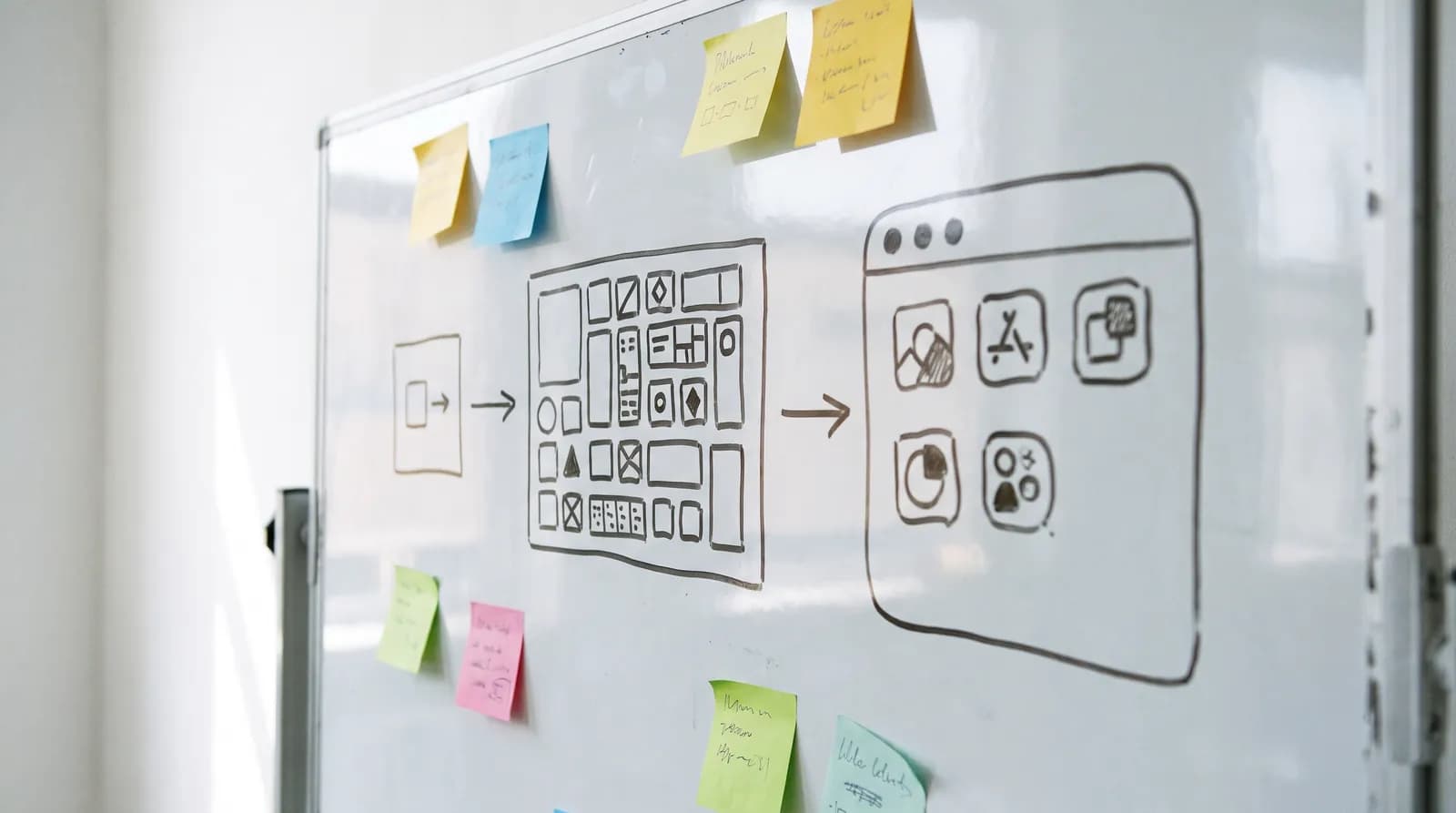
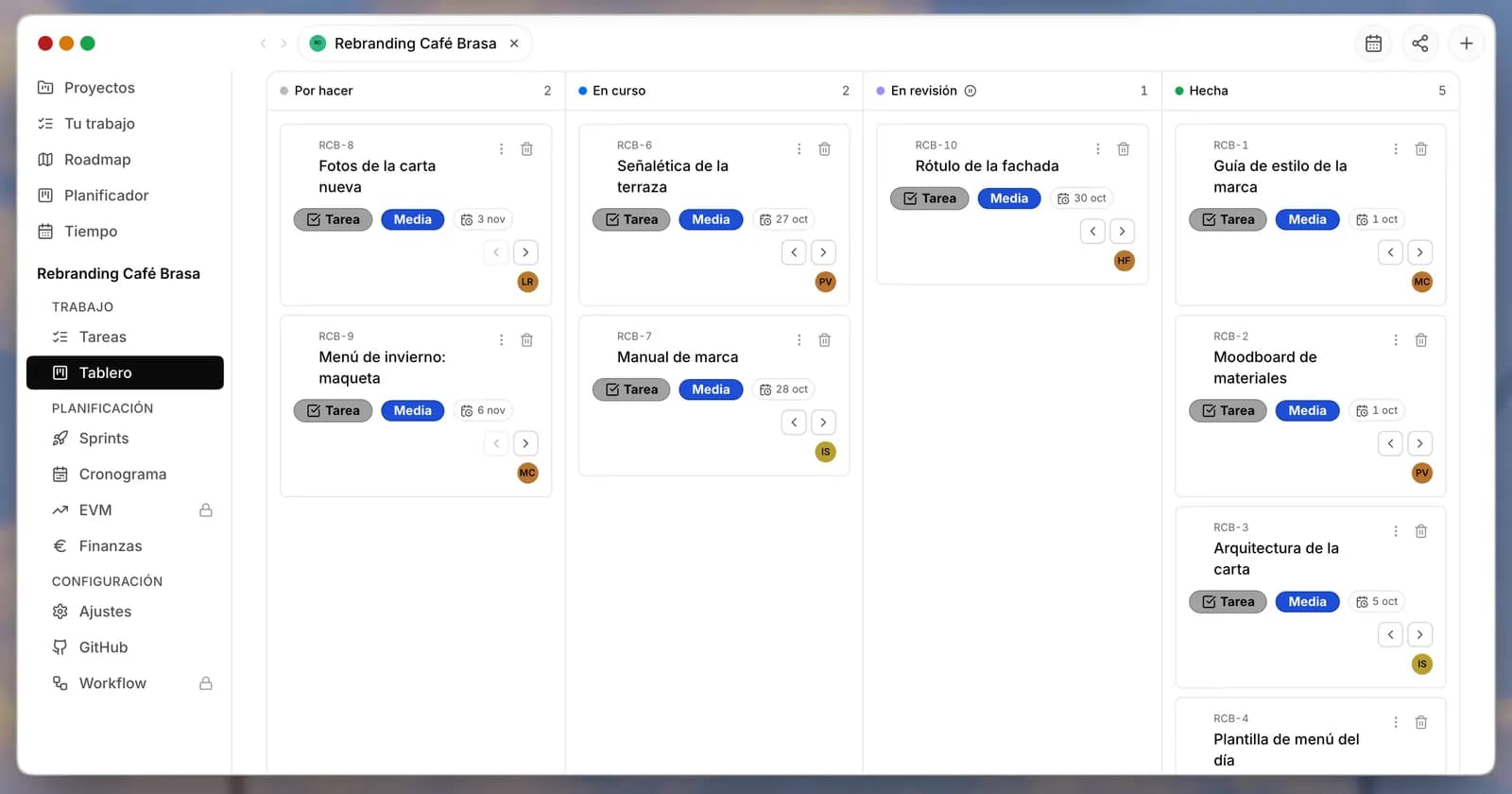
By July 2026 the PHP version worked, had users and had passed two thousand commits. Even so, every new feature cost more than the last. We decided to rewrite it from scratch: an API in FastAPI with its OpenAPI contract written first, and an interface in Next.js that uses exactly that same public API.
Throwing away working code is the decision nobody wants to make. We made it because the product we had in mind did not fit the architecture we had on the server.
Kern: an AI that asks first
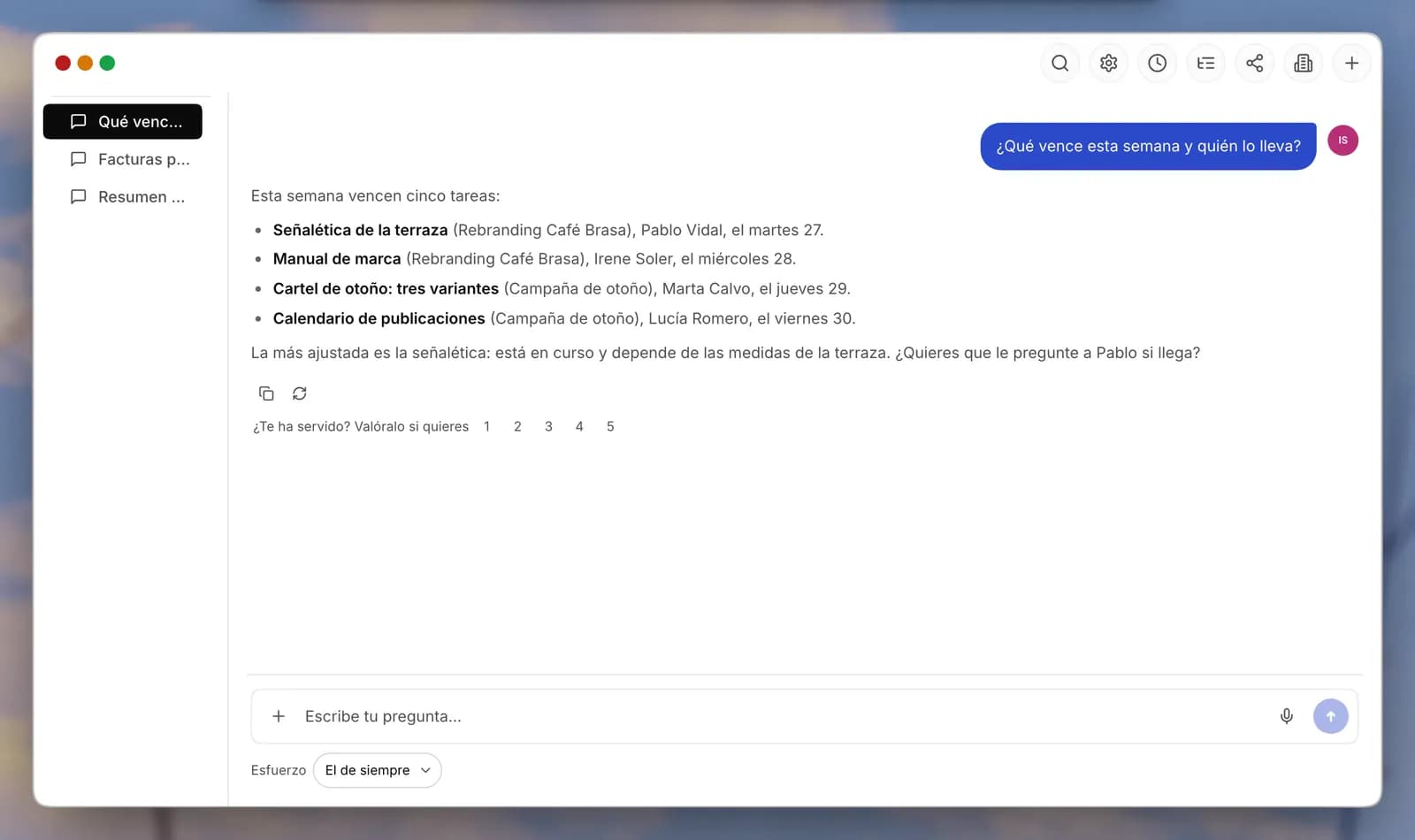
A few weeks later came Kern, Projekt's artificial intelligence. It answers with the same permissions as the person asking and, when it wants to change something, it proposes and someone confirms. It reads receipts and invoices from a photo and drafts tasks, quotes or expenses for someone to review.
From Projekt to Projekt Republic
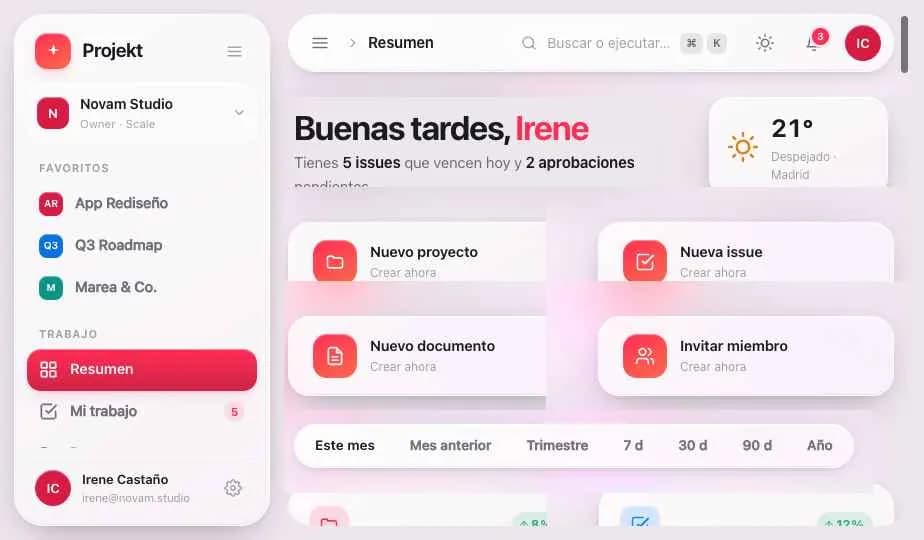
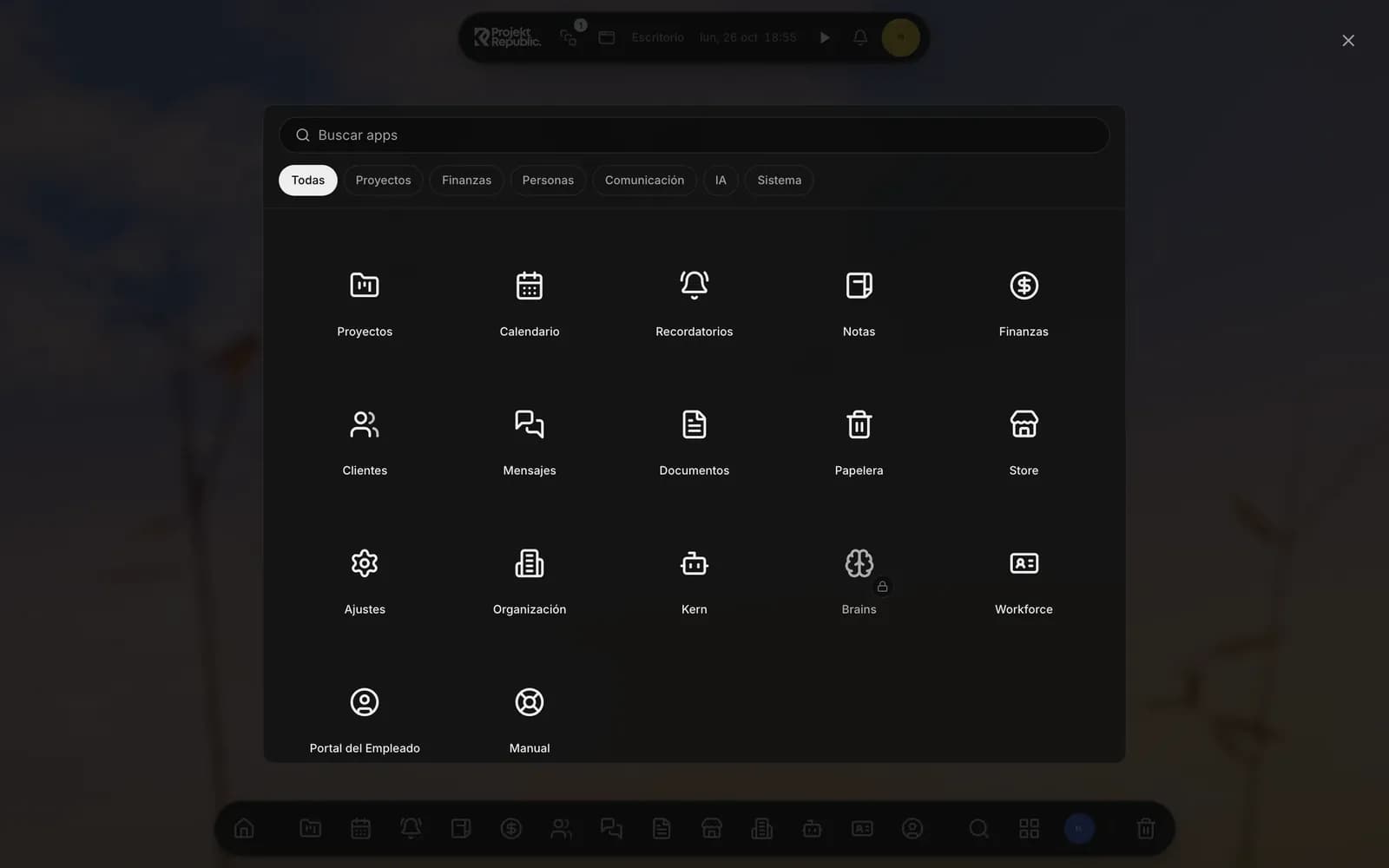
In August 2026 the product changed its name and its shape. Projekt became Projekt Republic and stopped being a website with menus to become an operating system of tools: a desktop with windows, a dock and ⌘K, and a catalogue of apps that share data and permissions.
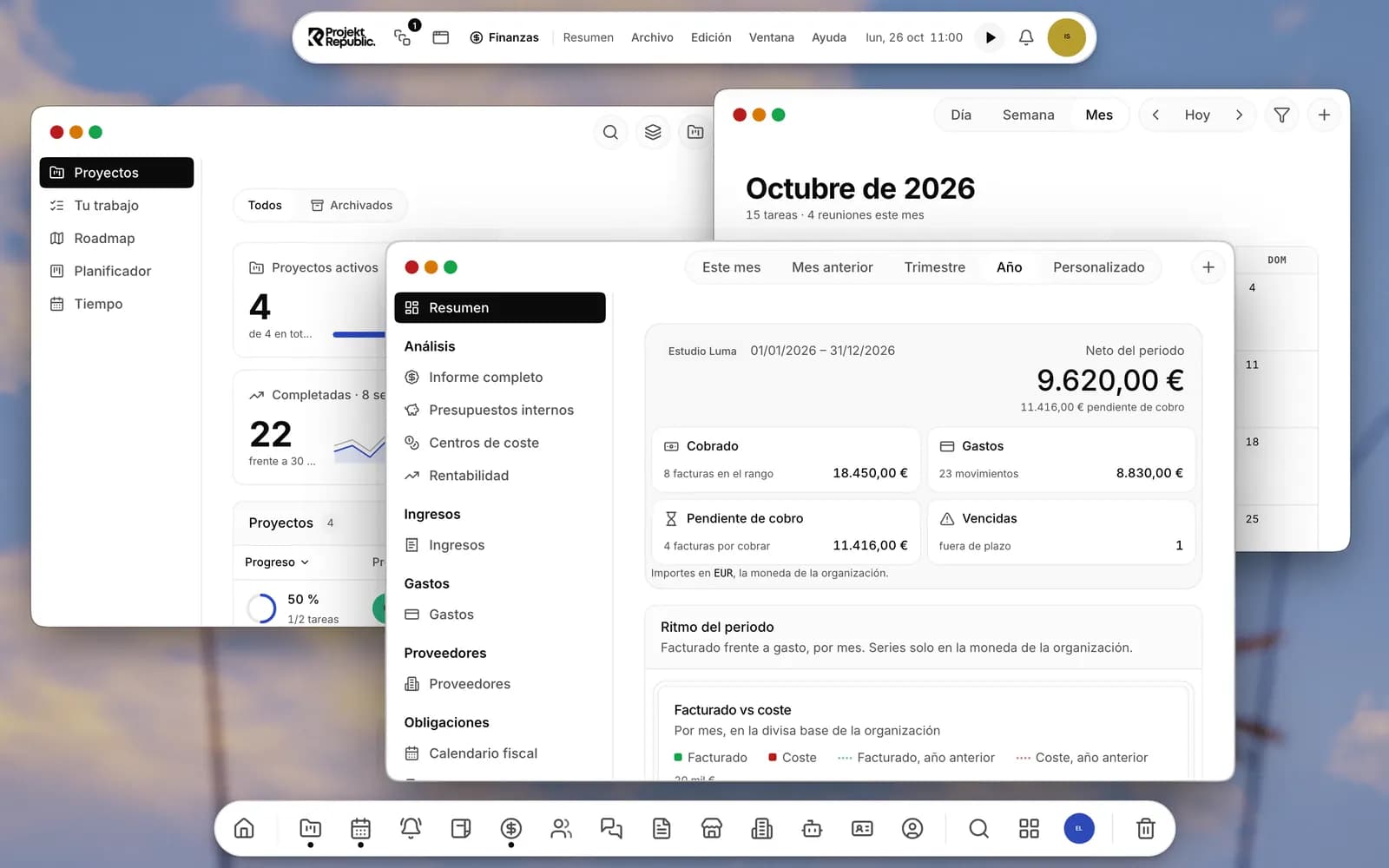
More apps followed. The newest is Werk, the coding environment, which got its name in November 2026 and now works from a phone too. Today the catalogue has seventeen apps and five extensions.
The people behind it
Projekt Republic is the work of a small team. Nicolás Valfiguer started it and set the product's direction. Alberto Pellitero led the engineering of the new platform. Alongside them, other team members have contributed code, testing and judgement across more than five thousand commits.
We built the tool we needed ourselves, and we use it every day to run the company.
Valfiguer runs on Projekt Republic: the company's projects, hours and invoices live there. To try it, the free edition is at projektrepublic.com, and what it does today is summed up on its page.